

Ice building up inside my fridge — Causes and How to Fix it
Ice building up inside your fridge is a common issue that many homeowners face, especially when the cooling system starts working unevenly. You may notice frost forming on walls, food getting stuck in ice, or airflow getting blocked inside the compartments. This usually points to an internal imbalance rather than a complete breakdown, and it often needs quick attention before it affects overall performance.
In many cases, this problem is linked to airflow blockage, door seal gaps, or a faulty defrost system that allows ice to keep forming over time. Ignoring it can lead to poor cooling and higher energy use. Getting help like fridge repair in Dubai at the right time can stop further damage and restore proper temperature balance inside both the fridge and freezer sections.
Faulty Defrost Heater – The Reason Behind Ice Buildup
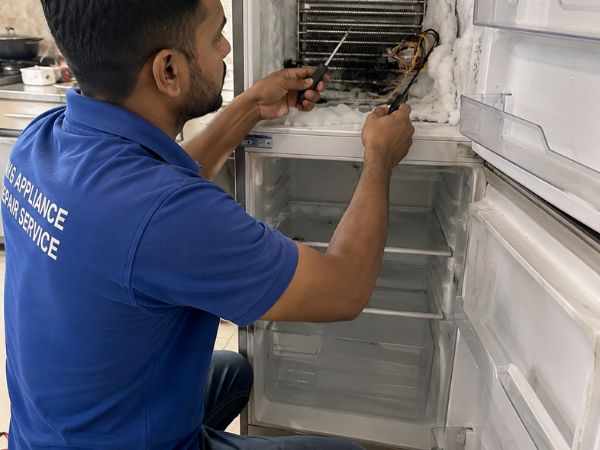
A faulty defrost heater is one of the main reasons ice builds up inside a fridge. It stops the system from melting frost on the evaporator coil, which leads to ice accumulation, blocked airflow, and poor cooling performance across both fridge and freezer sections.
What the defrost heater does in your fridge
The defrost heater melts frost that naturally forms on the evaporator coil during cooling cycles. This keeps airflow smooth and ensures cold air moves properly between the freezer and fridge compartments for balanced temperature control.
Melts frost on the evaporator coil during cycles
Melts frost on the evaporator coil during cycles to prevent ice buildup. This process keeps airflow channels open so cold air can circulate properly and maintain stable cooling inside the refrigerator.
What happens when it stops working
When the defrost heater stops working, frost is no longer melted during cooling cycles. Ice starts building up on the coils, which slowly blocks airflow and affects the overall cooling efficiency of the fridge system.
Ice keeps building up on coils
Ice keeps building up on coils when defrost heating fails. This creates thick frost layers that restrict airflow and reduce the fridge’s ability to maintain proper cooling levels.
Airflow gets blocked completely
Airflow gets blocked completely when ice covers internal coils and vents. Cold air cannot move from the freezer to the fridge, leading to uneven temperatures and poor cooling performance.
Symptoms you will notice
Defrost heater failure shows clear signs, such as visible ice buildup and cooling issues. These symptoms help identify the problem early, before it leads to complete cooling failure inside the fridge system.
Thick ice behind the freezer panel
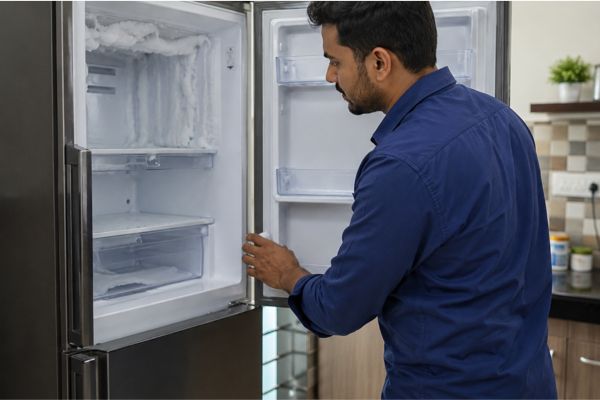
- Ice builds up in thick layers behind the freezer’s back panel
- Airflow gets blocked, stopping proper cold air circulation
- Frost keeps increasing when the defrost system is not working
- Cooling efficiency drops inside both the fridge and freezer sections
The fridge and freezer are not cold enough
- Both compartments fail to maintain the required temperature level
- Food starts losing freshness due to weak cooling performance
- Cold air circulation becomes uneven inside the system
- Compressor runs longer, but the cooling result stays weak
The freezer is not working properly
- Freezer temperature becomes unstable and does not stay frozen
- Ice formation becomes irregular or stops completely
- Cooling power reduces due to blocked airflow or frost issues
- Food stored inside starts softening or partially thawing
Door Seal Gap – Hidden Cause of Ice Formation
A door seal gap is a hidden reason behind ice buildup inside the fridge. When the gasket fails to close properly, warm air enters the compartment, disturbing the cooling balance and leading to moisture freezing inside as ice over time.
How door gasket control temperature
The door gasket controls internal temperature by creating a tight seal around the fridge door. It blocks warm air from entering and helps maintain stable cooling conditions inside, ensuring proper airflow and consistent temperature across all compartments.
Prevents warm air from entering the fridge
Prevents warm air from entering the fridge by sealing the door edges tightly. This keeps cold air inside and avoids temperature imbalance that can lead to ice formation and cooling issues.
What happens when a seal gets damaged
When the seal gets damaged, it loses its ability to block outside air. Warm air enters the fridge and mixes with cold air, causing moisture to freeze inside and slowly build up ice in different areas.
Warm air enters → moisture freezes inside
Warm air enters the fridge and turns into moisture when it meets cold surfaces. This moisture freezes quickly, creating ice buildup on walls, shelves, and cooling coils inside the fridge.
Wrong Temperature Settings That Create Ice Problems
Incorrect temperature settings can cause excessive ice buildup inside your fridge and freezer. When cooling levels are set too low, the system overcools internal compartments, creating frost and ice that affect airflow, cooling efficiency, and overall appliance performance.
Ideal fridge and freezer temperature range
Maintaining the correct temperature range helps the cooling system work efficiently. Balanced settings prevent excessive frost formation, support proper airflow, and keep food fresh while allowing the fridge and freezer to operate at stable temperatures.
Balanced cooling keeps airflow stable
Balanced cooling keeps airflow stable by maintaining proper temperatures in both compartments. This prevents excess frost formation and allows cold air to circulate freely throughout the appliance.
What goes wrong with incorrect settings
Incorrect temperature settings force the fridge to cool more than necessary. This creates excess frost, increases energy consumption, and puts additional pressure on internal components that regulate cooling and airflow.
Overcooling leads to unnecessary ice buildup
Overcooling leads to unnecessary ice buildup because moisture freezes faster on internal surfaces. Frost gradually accumulates and may block vents, reducing airflow and cooling performance.
Compressor runs longer than needed
The compressor runs longer than needed when the temperature settings are too low. Continuous operation increases energy use and encourages frost formation inside cooling compartments.
User mistakes that trigger this issue
Many ice buildup problems result from simple temperature setting mistakes. Incorrect adjustments can disrupt cooling balance, increase frost formation, and create unnecessary strain on the refrigerator system.
Setting the freezer too low
Setting the freezer too low causes excessive freezing and frost accumulation. The appliance works harder than necessary, leading to ice formation around vents, walls, and internal cooling components.
Frequent manual adjustments
Frequent manual adjustments prevent the cooling system from stabilizing properly. Constant changes force the fridge to repeatedly adapt, increasing the likelihood of frost buildup and uneven temperatures.
Professional Fridge Repair Solution
When ice keeps building up inside your fridge or freezer, the problem is usually deeper than surface frost. With quick fridge repair service in Dubai, technicians inspect the defrost heater, airflow system, door gasket, and temperature controls to find the exact cause. This helps restore proper cooling, prevent repeated ice buildup, and protect your appliance from long-term damage.
A fast and accurate repair also helps avoid food spoilage and unnecessary energy consumption. Through UAE appliances repair, experts provide on-site diagnosis and repair for major fridge brands, fixing issues like defrost failure, airflow blockage, and cooling imbalance to keep your fridge running efficiently again.
Wrapping Up:
Ice inside your fridge is more than just a minor inconvenience. It often points to issues with the defrost heater, door seal, airflow system, or temperature settings. When ice is building up inside the fridge, it can block airflow, reduce cooling efficiency, and force the appliance to work harder than necessary. Taking action early helps prevent food spoilage, higher electricity bills, and long-term damage to important components.
The good news is that most ice buildup problems can be identified and fixed before they turn into major repairs. Regular checks of door seals, temperature settings, and cooling performance can make a big difference. If the ice keeps returning after cleaning or defrosting, professional inspection is the best way to restore proper airflow and keep your fridge operating at its best.
