

Why Is the Dryer Taking Too Long to Dry Clothes, and How Can It Be Repaired?
A dryer that takes too long to dry clothes can quickly disturb your daily routine and leave you with unfinished laundry even after long cycles. You may notice clothes coming out damp, heavy fabrics staying wet, or the machine running longer than expected. This issue often points to airflow blockage, weak heating, or mechanical problems inside the system that reduce drying performance and waste both time and energy.
Many homeowners start searching for dryer machine repair in Dubai when repeated cycles still fail to dry clothes properly. This problem usually builds up slowly due to lint buildup, faulty sensors, or worn internal parts that affect heat and drum movement. Understanding the real cause helps you take the right action early and avoid further damage that can lead to costly repairs or complete dryer failure.
How a Dryer Dries Clothes
A dryer removes moisture using heat, airflow, and drum movement, working together. Hot air evaporates water from clothes, airflow pushes moisture out, and sensors control timing for efficient drying without damaging fabrics.
Role of Heat in Removing Moisture
Heat warms the clothes and turns trapped water into vapor. This process reduces moisture levels inside fabrics, making drying possible. Without proper heat, clothes stay damp even after long running cycles.
Airflow System That Carries Damp Air Out
Airflow moves hot, moist air out of the drum through vents. This keeps fresh hot air circulating inside. If airflow is blocked, moisture stays trapped, slowing down the drying process significantly.
Drum Rotation and Even Drying
Drum rotation keeps clothes moving so heat spreads evenly across all fabrics. This prevents clumping and ensures no wet spots remain. Without proper spinning, clothes dry unevenly and take much longer to finish.
Moisture Sensors and Cycle Control
Moisture sensors detect how wet clothes are and adjust drying time automatically. They stop the cycle when the clothes are dry enough. Faulty sensors may extend or shorten drying cycles incorrectly.
Proper Ventilation for Faster Drying
Good ventilation helps remove humid air quickly from the dryer system. It supports steady airflow and prevents moisture buildup inside the drum. Poor ventilation often leads to longer drying times and weak performance.
Dryer Taking Too Long to Dry Clothes? Get Expert Repair in Dubai Today
Airflow Problems: Hidden Cause Behind Slow Drying
Airflow issues often stay unnoticed but create major drying delays inside the dryer. When hot air cannot move freely through the system, moisture stays trapped in clothes, and the drying cycle becomes slow and inefficient.
Lint builds up inside the filter and air ducts, blocking smooth airflow. Hot air cannot circulate properly, so moisture stays inside the clothes. This restriction forces the dryer to run longer cycles and reduces overall drying performance.
A blocked vent hose stops moist air from leaving the dryer. Lint, dust, or debris restricts the passage of air, causing heat to stay trapped inside. This leads to weak drying results and longer operating time.
The outside vent cap can get blocked or stuck due to lint or dirt. When this happens, air cannot exit the system properly. Moisture builds up inside the duct, slowing down the entire drying process.
Poor airflow in the laundry area affects how the dryer releases hot air. If the room feels closed or humid, the dryer struggles to push out moisture. This results in longer drying times and reduced efficiency.
Signs Your Dryer Is Taking Too Long
A dryer taking too long to dry clothes often shows clear performance issues. These signs help you understand early that something inside the system is affecting heat, airflow, or drum movement.
Heating Problems That Cause Slow Drying
Heating problems directly affect how fast moisture leaves clothes inside the dryer. When heat becomes weak, uneven, or inconsistent, the drying cycle takes longer, and clothes often remain damp even after full operation.
A weak heating element produces less heat than required for proper drying. Clothes do not reach the right temperature for moisture evaporation, so the dryer runs longer cycles and still leaves fabrics slightly damp.
In some electric dryers, only part of the heating element works while the rest fails. This creates uneven heat inside the drum, causing slow drying, damp patches, and inconsistent results after every cycle.
Gas dryers depend on proper ignition to produce heat. If the burner fails to ignite or shuts off early, heat levels drop. This leads to longer drying times and poor moisture removal from clothes.
A faulty thermostat sends incorrect temperature signals to the dryer system. It may stop heating too early or delay activation, causing unstable heat levels and significantly increasing total drying time for every load.
Reasons Why Your Dryer Takes Too Long to Dry Clothes
User Mistakes That Make Drying Slower
Many slow-drying problems come from daily usage habits that affect airflow, heat balance, and drum movement. Small mistakes during loading or setting selection can easily increase drying time and reduce overall performance.
When you put too many clothes inside the dryer, the airflow gets blocked between fabrics. Heat cannot circulate evenly, so clothes stay damp in the middle. The drum also struggles to rotate freely, which slows the drying process.
Heavy items like towels take longer to dry compared to light clothes. When both are mixed, lighter fabrics dry quickly while heavier ones stay wet. This imbalance forces the dryer to run longer cycles.
A clogged lint filter restricts airflow and traps moisture inside the drum. Hot air cannot move properly, so drying becomes slow. Many users ignore filter cleaning, which directly reduces drying efficiency over time.
Selecting an unsuitable drying program affects the heat level and cycle duration. Delicate or low-heat settings may not dry heavy clothes properly. This results in longer running time and clothes still feeling damp after the cycle.
Professional Repair Solutions for Slow-Drying Dryers
When a dryer takes too long to dry clothes, technicians first inspect airflow, heating, and drum movement systems to find the exact fault. They check lint blockages, vent restrictions, heating element performance, sensors, and motor condition. This step helps identify whether the issue comes from mechanical wear, electrical faults, or poor air circulation inside the dryer.
After diagnosis, technicians repair or replace faulty parts such as heating elements, thermostats, belts, motors, or sensors, depending on the issue. They also clean blocked vents and restore proper airflow to improve drying speed. Professional UAE Appliances Repair service helps bring back normal drying performance, reduces cycle time, and prevents repeated breakdowns by fixing the root cause instead of temporary symptoms.
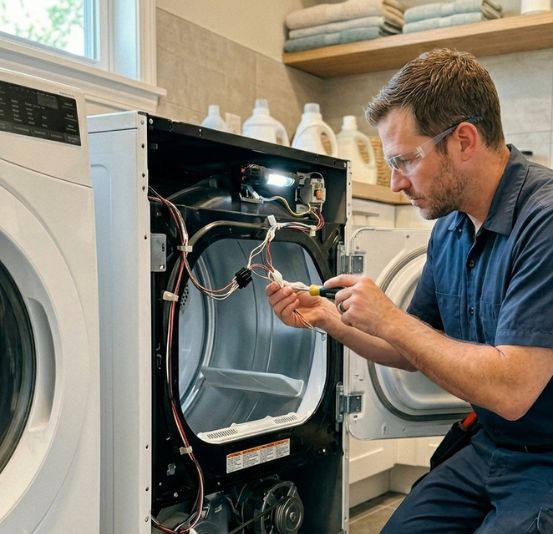
How Technicians Diagnose Slow Drying Problems
Technicians inspect dryers step by step to find why drying takes too long. They check airflow, heating, electrical systems, drum movement, and sensors to identify faults and restore proper drying performance efficiently.
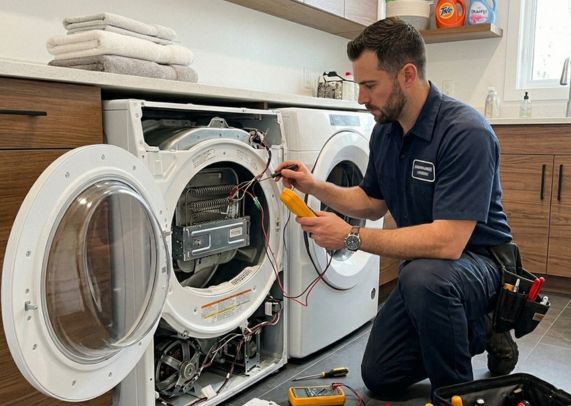
Airflow Testing
Technicians use airflow meters and visual checks to evaluate how air moves through the dryer. They look for lint buildup, blocked vents, or restricted passages that slow down moisture removal and extend drying time.
Heating System Inspection
Technicians test the heating element, thermostat, and temperature output to confirm proper heat generation. Weak or uneven heating directly affects moisture evaporation, causing clothes to stay damp even after full drying cycles.
Sensor Calibration Checks
Technicians inspect moisture and temperature sensors to ensure accurate readings. Faulty sensors can misjudge dryness levels, causing the dryer to stop early or keep running longer than needed, leading to inefficient drying results.
Wrapping Up:
A dryer that takes too long to dry clothes is more than just a delay in your routine. It clearly shows that airflow, heat, or internal components are not working at full strength. When you ignore early signs, the problem slowly grows and leads to longer cycles, higher energy use, and extra pressure on the machine.
When you understand the real reasons behind a dryer taking too long to dry clothes, you can act early and avoid major breakdowns. Proper cleaning, correct usage, and timely repair help your dryer perform better and last longer. If the issue continues, getting it checked by a technician keeps your appliance running smoothly and saves you from costly replacements later.
Get Fast Repair at Your Doorstep in Dubai
Contact our team in Dubai and fix dryer issues quickly so your laundry routine gets back on track.
