

Refrigerator Temperature Control Not Working: Causes and Solutions
Your refrigerator keeps food fresh by maintaining a safe and consistent temperature throughout the day. When the temperature control stops working, the fridge may become too warm or too cold, leading to spoiled groceries, frozen fresh food, and higher electricity consumption. Common causes include thermostat failure, faulty sensors, damaged control boards, or electrical issues that affect normal cooling performance and food safety.
This guide explains the most common reasons behind refrigerator repair in Dubai and why refrigerator temperature control problems should never be ignored. You will learn how the cooling system works, the warning signs of a faulty temperature controller, and the best solutions to restore proper performance. We will also discuss Dubai’s extreme summer temperatures and Ramadan food storage needs, along with practical maintenance tips that help keep your refrigerator operating efficiently.
What Does Refrigerator Temperature Control Do?
The refrigerator temperature control regulates cooling by monitoring and adjusting the internal temperature. It works with the thermostat, sensors, and control board to maintain safe food storage, improve cooling efficiency, reduce energy consumption, and protect important refrigerator components from unnecessary wear caused by unstable temperatures.
Controls Cooling Temperature
The fridge temperature control manages how much cooling the refrigerator produces. It signals the compressor to start or stop as needed, helping maintain the selected temperature and providing consistent cooling for fresh food and beverages throughout the day.
Protecting the Food Freshness
A properly working temperature control system keeps food at safe storage temperatures. Stable cooling helps preserve fruits, vegetables, dairy products, and meat while reducing bacterial growth, unpleasant odors, and unnecessary food waste caused by incorrect refrigerator temperatures.
Supports Compressor Operation
The temperature control works closely with the compressor to maintain balanced cooling. It prevents unnecessary running cycles, reduces pressure on the compressor, improves cooling, and helps extend the lifespan of important components through controlled operation.
Prevents Ice Build-Up
Proper temperature regulation prevents excessive cooling that may cause frost or ice inside the refrigerator compartment. Balanced airflow and correct cooling cycles help reduce moisture buildup while maintaining even temperatures across all storage sections.
Improves Energy Efficiency
An accurate temperature control system allows the refrigerator to cool only when needed. This reduces unnecessary compressor operation, lowers electricity consumption, and helps the appliance deliver consistent cooling without wasting energy throughout daily use.
Maintains Safe Food Storage
Maintaining the correct refrigerator temperature helps keep food within recommended safety limits. Stable cooling protects groceries from spoilage, especially during Dubai’s hot weather when refrigerators work harder to preserve fresh food for longer periods.
Why Is Your Refrigerator Temperature Control Not Working?
When the refrigerator temperature control not working problem appears, the appliance may cool too much or not enough. Common causes include thermostat failure, damaged sensors, faulty control boards, loose electrical connections, or worn control components that prevent the fridge temperature control system from regulating cooling accurately.
Faulty Thermostat
A faulty thermostat cannot detect the correct refrigerator temperature or control compressor operation properly. This may cause continuous cooling, insufficient cooling, or unstable temperatures that affect food freshness and overall refrigerator performance.
Defective Temperature Sensor
The refrigerator temperature sensor monitors cooling conditions and sends information to the control system. If it becomes defective, the refrigerator may receive incorrect readings, causing uneven cooling, temperature fluctuations, or poor food preservation.
Control Board Failure
The electronic control board manages communication between cooling components. When it fails, the refrigerator temperature control may stop responding correctly, affecting compressor operation, fan performance, and temperature regulation inside the appliance.
Damaged Thermistor
The thermistor measures internal temperature changes and helps control cooling cycles. A damaged thermistor sends inaccurate readings, causing the refrigerator to overcool, undercool, or struggle to maintain the selected temperature consistently.
Loose Electrical Connections
Loose or damaged electrical connections can interrupt communication between the refrigerator thermostat, sensors, and control board. These wiring problems may cause the refrigerator temperature control to behave unpredictably or stop working completely.
Worn Control Knob or Digital Panel
A worn temperature control knob or faulty digital control panel may prevent you from changing cooling settings correctly. The refrigerator may ignore adjustments and continue operating at the wrong temperature until repaired.
Common Signs Your Fridge Temperature Control Has Failed
A faulty temperature control usually produces noticeable warning signs before complete failure. Recognizing these symptoms early helps prevent food spoilage, improves cooling performance, and reduces the chance of expensive refrigerator repairs caused by prolonged temperature problems.
Fridge Too Cold
Food inside the refrigerator freezes unexpectedly, including fruits and vegetables. Overcooling often happens when the temperature control system cannot regulate compressor operation or detect the correct internal temperature.
Freezer Works but Fridge Doesn’t
The freezer maintains normal cooling while the refrigerator section stays warm. This problem may indicate faulty temperature controls, sensor issues, restricted airflow, or problems with the cooling distribution system.
Food Spoils Quickly
Milk, vegetables, meat, and other fresh food spoil sooner than expected because the refrigerator cannot maintain safe cooling temperatures. This often indicates a temperature control problem that requires immediate inspection.
Fridge Too Warm
The refrigerator compartment feels warmer than normal even though the appliance is running. Poor cooling may result from a faulty thermostat, a damaged sensor, or a malfunctioning control board affecting temperature regulation.
Temperature Changes Frequently
The refrigerator temperature constantly rises and falls without any manual adjustment. These unstable cooling conditions often point to sensor faults, thermostat problems, or electronic control issues affecting normal refrigerator operation.
Display Shows Wrong Temperature
The digital display may show inaccurate temperature readings that do not match actual cooling conditions. Faulty sensors, damaged control boards, or display panel problems can cause incorrect temperature information.
Refrigerator Temperature Control Not Working? Get Fast Repair in Dubai Today
What Happens If You Ignore Temperature Control Problems?
Ignoring refrigerator temperature control problems can reduce cooling performance, increase electricity costs, and create food safety risks. Early repairs help protect groceries, prevent unnecessary compressor wear, and keep your refrigerator operating efficiently, especially during Dubai’s hot summers and busy Ramadan season.
Incorrect refrigerator temperatures allow bacteria to grow more quickly on fresh food. During Dubai’s summer heat and Ramadan, proper cooling becomes even more important to keep stored meals fresh and safe.
A faulty temperature control forces the compressor to run longer than necessary. Continuous operation increases electricity usage, making your refrigerator consume more power while delivering poor cooling performance.
When cooling controls fail, the compressor receives incorrect signals and works harder than normal. Continuous operation increases wear, raises operating temperatures, and may shorten the compressor’s service life.
Unstable temperature control creates uneven cooling throughout the refrigerator. Some shelves become too warm while others become too cold, affecting food freshness and reducing overall appliance performance.
Incorrect temperature settings may freeze vegetables, fruits, drinks, and dairy products stored in the refrigerator compartment. This often indicates thermostat or sensor problems requiring professional inspection and repair.
Ignoring a small cooling issue can damage major refrigerator components over time. Repairing thermostat or sensor problems early usually costs less than replacing compressors or electronic control boards later.
How to Adjust Fridge Temperature Correctly
Knowing how to adjust the fridge temperature correctly helps maintain food safety, improve cooling performance, and reduce electricity consumption. Small adjustments made gradually allow the refrigerator to stabilize while preventing unnecessary pressure on the cooling system.
How Technicians Diagnose Temperature Control in Dubai
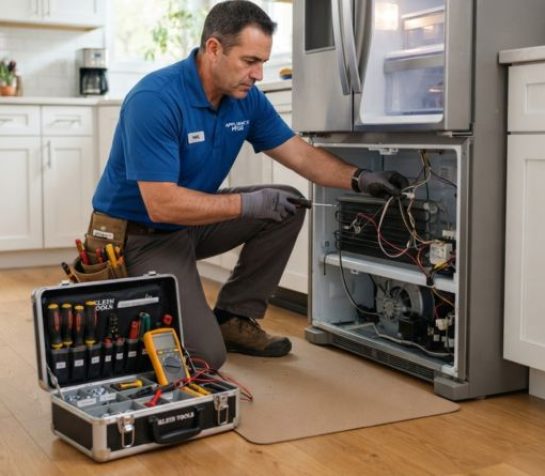
A refrigerator with refrigerator temperature control not working requires a detailed inspection to identify the exact fault, instead of replacing parts unnecessarily. UAE Appliances Repair technicians begin by performing thermostat testing, sensor inspection, and checking the fridge temperature control settings. They also inspect wiring connections, the thermistor, damper control assembly, and electronic components to locate faults that affect cooling accuracy and temperature stability.
After identifying the problem, technicians carry out a complete control board diagnosis to verify that all electrical signals are working correctly. They then perform a cooling performance test to measure temperature consistency in both the refrigerator and freezer compartments. Once repairs are completed, the appliance is tested under normal operating conditions to ensure accurate temperature control, safe food storage, and reliable cooling performance, even during Dubai’s hot weather.
Refrigerator Parts That Affect Temperature Control
Several refrigerator components work together to maintain consistent cooling. If any of these parts fail, the temperature control system may become inaccurate, leading to poor cooling, unstable temperatures, food spoilage, and increased energy consumption.
1- Thermostat
The thermostat monitors refrigerator temperature and controls compressor operation. A faulty thermostat can cause continuous cooling, insufficient cooling, or incorrect temperature regulation inside the refrigerator compartment.
2- Temperature Sensor
The temperature sensor measures internal cooling conditions and sends information to the control board. Incorrect sensor readings can cause unstable temperatures and poor cooling performance throughout the refrigerator.
3- Thermistor
The thermistor detects temperature changes and helps regulate cooling cycles. A damaged thermistor may send false readings, causing the refrigerator to overcool, undercool, or operate inefficiently.
4- Electronic Control Board
The electronic control board processes signals from the thermostat and sensors to manage cooling functions. When it fails, the refrigerator may lose accurate temperature control and develop cooling problems.
5- Damper Control Assembly
The damper control assembly regulates cold airflow between the freezer and refrigerator compartments. A faulty damper may restrict airflow, creating uneven temperatures and reducing cooling efficiency.
6- Air Diffuser
The air diffuser distributes cold air evenly throughout the refrigerator compartment. If blocked or damaged, airflow becomes uneven, leading to inconsistent cooling and temperature control problems across different shelves.
Conclusion:
A refrigerator with temperature control issues can affect food quality, energy usage, and overall appliance performance. Ignoring warning signs like unstable cooling, incorrect temperature readings, or spoiled food can lead to bigger problems, especially during Dubai’s hot summer months and busy periods like Ramadan, when proper food storage is important.
If your fridge struggles to maintain the right temperature, professional inspection can help identify faults with the thermostat, sensors, control board, or other cooling components. Refrigerator temperature control plays a key role in keeping food fresh, reducing unnecessary energy consumption, and maintaining safe storage conditions. With proper diagnosis and timely repair, your refrigerator can return to reliable cooling performance and operate efficiently for longer.
